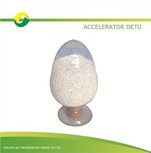
Precipitated silica is a synthetic amorphous form of silicon dioxide (SiO₂) produced by a wet chemical process. It appears as a white, free-flowing powder with a porous structure and a high specific surface area - properties that make it a functional additive across a broad spectrum of industries.
Market Overview
The global precipitated silica market reached US$5.1 billion in 2025** and is projected to expand to nearly **US$7.0 billion by 2032, registering a CAGR of 4.5%. Other industry estimates place the 2025 market value at US$5.24 billion, projecting growth to US$9.12 billion by 2034 at a CAGR of 6.3%.
Key Properties
|
Property |
Description |
|
Appearance |
White, free-flowing powder |
|
Structure |
Porous, amorphous |
|
Surface Area |
High (controllable via process parameters) |
|
Purity |
≥ 98% SiO₂ (ignited basis) |
|
Moisture Content |
Typically 3–7% |
Major Applications
Precipitated silica holds the largest commercial significance among the three main types of synthetic amorphous silica. Tires and rubber applications account for approximately 57% of global demand, with the remainder distributed across:
Oral Care – Abrasive and thickener in toothpaste
Food & Feed – Anti-caking and free-flow aid
Coatings & Inks – Rheology control, gloss control, durability enhancement
Adhesives & Sealants – Thickening and reinforcement
Plastics – Performance additive
Agriculture – Carrier and anti-caking agent
Regional Landscape
Asia-Pacific dominates the precipitated silica market, accounting for 60.3% of global demand in 2025, driven by large-scale tire manufacturing, expanding automotive production, and rapid industrialization across China, India, and Southeast Asia. Europe ranks as the second-largest regional market, supported by high adoption of green tire technologies and sustainability-focused regulations.
Key Players
Major global producers include Solvay, Evonik Industries AG, Quechen Silicon Chemical Co., Ltd., and Madhu Silica Pvt. Ltd.